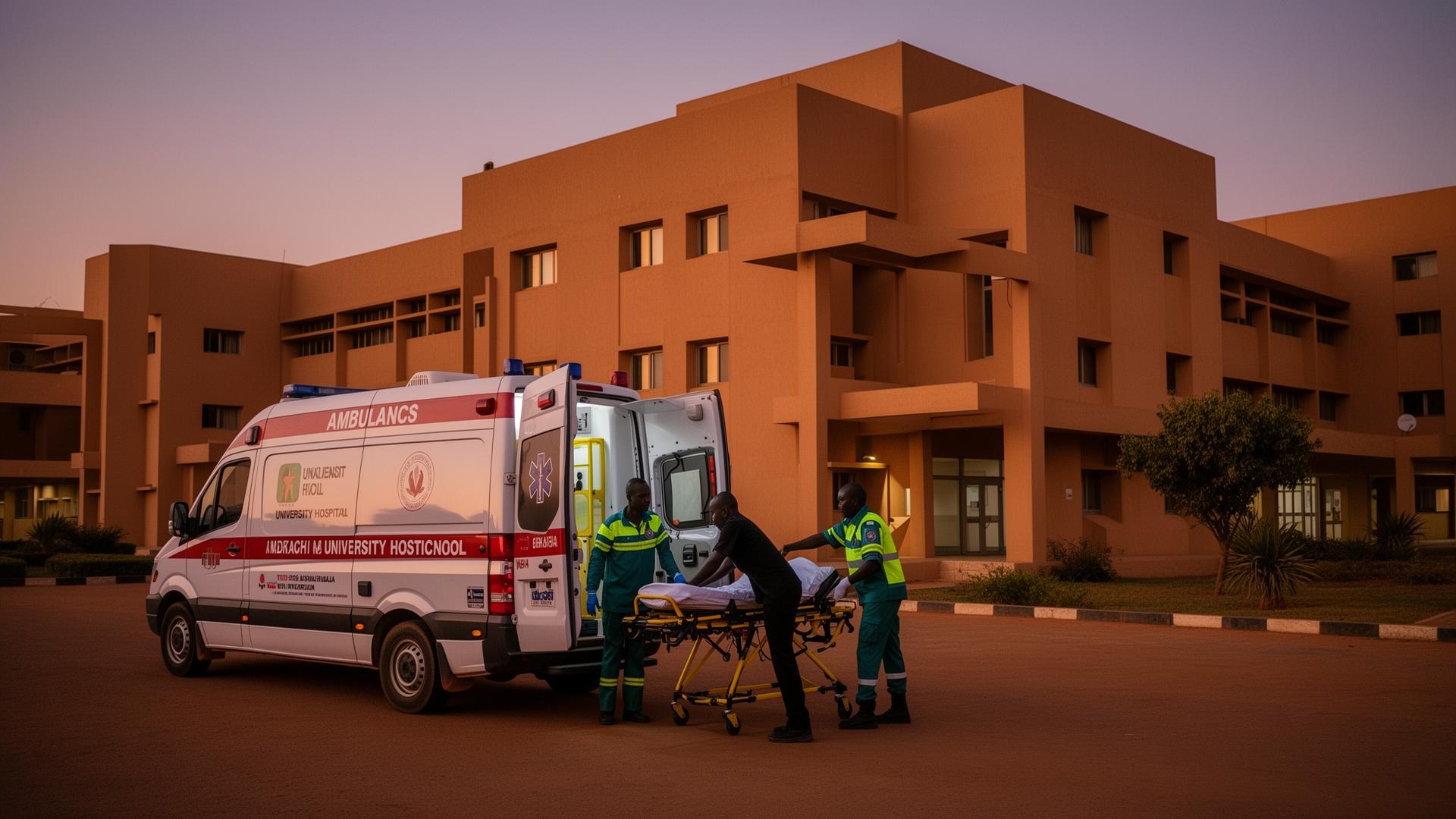
Emergency medicine training collaboration between African and German clinicians
GEMA — German-African Emergency Medicine AlliancePhase 2 · 2026 – 2030

German-African
Emergency Medicine Alliance

Transforming acute care through African–German collaboration in education, EMS, and trauma systems.

Coming soonThe GEMA story — documentary in productionVideo coming soon — stay tuned.
About the Alliance

A sustainable African–German cooperation for emergency care.

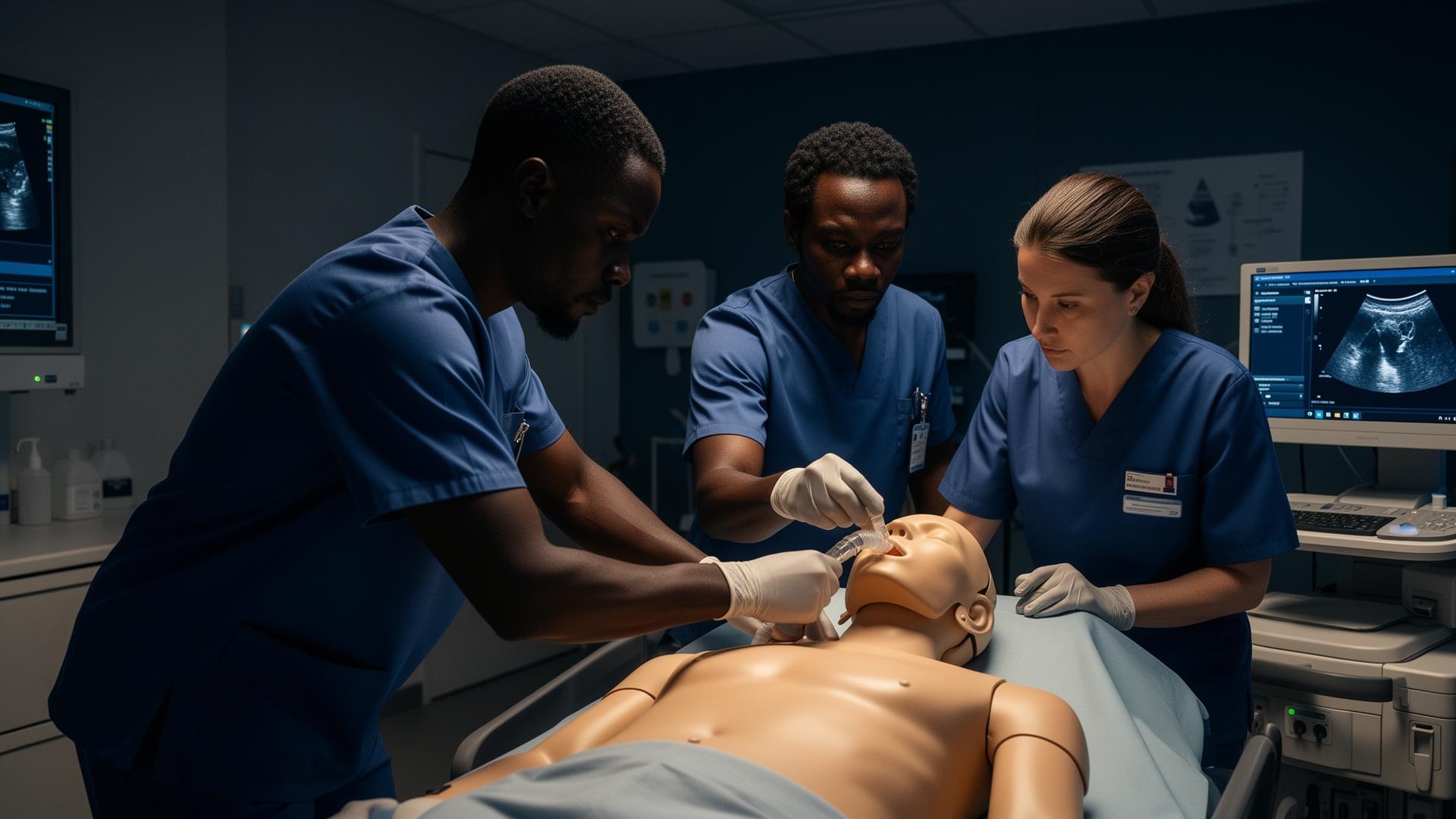
Hands-on emergency medicine training with African and German clinicians
Namibian colleagues at Rettungsdienst Mittelhessen
Airway management training at KCMC
Simulation training during a GEMA workshop

From 2021 to 2025, Philipps University Marburg and KCMC University in Moshi, Tanzania, with funding from the DAAD (German Academic Exchange Service, SDG Partnerships), established a Master's program in Emergency Medicine. This phase laid the foundation for structured training.

In Phase 2 (2026–2030), we deepen South–South partnerships with Addis Ababa University (Ethiopia), University of Namibia, Kamuzu University of Health Sciences (Malawi), and MUHAS (Tanzania). We will analyze existing curricula, identify strengths, and develop a unified program for all partners. A key goal is also establishing the first Master's program in Emergency Medicine in Namibia.

In this way, we create sustainable African–German cooperation and strengthen emergency care in the long term.

2021–2025
Foundation phase
2026–2030
Phase 2 expansion
6
Academic partners
5
Countries
Network

Partners across five countries and two continents.

An academic, clinical, and institutional alliance committed to strengthening emergency care systems in Sub-Saharan Africa.

Academic Partners

Philipps University Marburg logo

Philipps University Marburg

KCMC University logo

KCMC University

MUHAS logo

MUHAS

Addis Ababa University logo

Addis Ababa University

Kamuzu University of Health Sciences logo

Kamuzu University of Health Sciences

University of Namibia logo

University of Namibia

Funding Partners

DAAD logo

DAAD

BMZ logo

BMZ

Else Kröner-Fresenius-Stiftung logo

Else Kröner-Fresenius-Stiftung

Operational Partners

Terra Tech logo

Terra Tech

Rettungsdienst Mittelhessen logo

Rettungsdienst Mittelhessen

Community Partners

Freundeskreis Marburg-Moshi e.V. logo

Freundeskreis Marburg-Moshi e.V.

Network

Inside the partnership.

All participating universities shaping emergency medicine education across the alliance.

Philipps University Marburg — Marburg, Germany
Marburg, Germany
Lead academic partner

Philipps University Marburg

Philipps University Marburg, founded in 1527, with its Medical Faculty and especially the Center for Emergency Medicine, has been engaged for years in collaboration with Tanzania in the field of emergency medicine. The Center for Emergency Medicine at Philipps University Marburg serves a large catchment area and provides maximum care for a broad spectrum of critically ill and injured patients. The emergency department manages everything from severe trauma and resuscitations to complex medical emergencies across all specialties, including trauma surgery, cardiology, neurology, ophthalmology, and dermatology.

In the partnership, we contribute our comprehensive clinical, academic, and organizational expertise, while at the same time valuing the opportunity to learn from the experiences and perspectives of our partners in the Global South. This mutual exchange strengthens our shared goal: sustainably improving emergency medicine in Africa and beyond.

KCMC University — Moshi, Tanzania
Moshi, Tanzania
Founding African partner

KCMC University

The Kilimanjaro Christian Medical Centre (KCMC) in Moshi, Tanzania, is one of the country's largest referral hospitals and serves as a university teaching centre for several million people in Northern Tanzania and beyond. The hospital plays a central role in the care of critically ill and severely injured patients. It serves as an important center for medical education and research in East Africa.

The emergency department at KCMC manages a broad spectrum of acute illnesses and injuries – ranging from severe trauma as a result of road traffic accidents to medical, neurological, and pediatric emergencies. In recent years, KCMC has increasingly become an important center for the development of emergency medicine in Tanzania making it the second centre to offer masters in Emergency medicine program. The Kilimanjaro Region has also been designated by the Tanzanian government as a pilot region for the development of modern emergency care systems, including the establishment of a regional ambulance and emergency medical service system. KCMC therefore plays a central role in developing new concepts for prehospital and in-hospital emergency care in Tanzania.

As part of the partnership with Philipps University Marburg, KCMC is actively engaged in building academic structures, advancing clinical care, and strengthening research and education in emergency medicine. Together, we are working to create sustainable structures for modern emergency care in Tanzania and Sub-Saharan Africa. The partnership is characterized by mutual learning, cultural exchange, and the shared goal of sustainably improving care for critically ill patients.

MUHAS — Dar es Salaam, Tanzania
Dar es Salaam, Tanzania
Academic partner

MUHAS

Muhimbili University of Health and Allied Sciences (MUHAS) which is located in Dar es Salaam, Tanzania, is the country's leading medical universities and a key institution for medical education, research, and consultancy in East Africa. It is premier university with more than one hundred specialist and super-specialist training program in East Africa. The university and its affiliated clinical training sites have played a major role in the development of modern emergency medicine in the country.

In 2010, MUHAS established one of the first formal postgraduate training programs in Emergency Medicine – a Master of Medicine (MMed) in Emergency Medicine. To date, the program has graduated 122 specialists, who are now contributing to emergency care, teaching, and health system development across Tanzania. The emergency departments at teaching hospital affiliated with MUHAS manage a broad spectrum of critically ill and injured patients, including severe trauma, medical emergencies, and paediatric and obstetric emergencies.

In addition, the MUHAS Emergency Medicine program is plays major role in the following: • Pioneering role in postgraduate EM training in Tanzania and East Africa. • Strong clinical exposure across a high-volume, diverse patient population. • Integrated curriculum aligned with international standards and local needs. • Active contribution to national emergency care policy and protocol development. • Experienced faculty combining clinical excellence with educational leadership.

As part of the African-German partnership network, MUHAS contributes extensive academic and clinical expertise in emergency medicine, curriculum development, and postgraduate training. At the same time, the collaboration promotes exchange between institutions with different healthcare systems and experiences. Together with partner universities, MUHAS supports the development of sustainable training structures, regional cooperation, and the long-term strengthening of emergency care systems in Sub-Saharan Africa.

Kamuzu University of Health Sciences — Malawi
Malawi
Academic partner

Kamuzu University of Health Sciences

Kamuzu University of Health Sciences (KUHeS) in Malawi is one of the country’s leading institutions for medical education, clinical training, and health research. Through its teaching programs and affiliated hospitals, KUHeS plays an important role in strengthening healthcare systems and advancing emergency and acute care in Malawi.

The university and its clinical partners manage a broad range of critically ill and injured patients, including trauma cases, infectious diseases, obstetric emergencies, paediatric emergencies, and non-communicable diseases. In recent years, KUHeS has increasingly expanded its focus on emergency and critical care training in response to the growing need for structured emergency medicine systems in Malawi and the wider Sub-Saharan African region. KUHeS’ implementation of a Master of Medicine (MMED) in Emergency Medicine specialisation programme and graduating students in the process has been a significant milestone. The Emergency Medicine Unit within the University is also involved in teaching training of other MMED students who rotate in the Emergency Department as a requirement of their training. These programmes are but not limited to Internal Medicine, Family Medicine, Surgery etc.

The University prides itself in being ranked 6th among African academic institutions in health sciences research output, according to the Nature Index 2026. This ranking reflects strong research in fields like clinical sciences including Emergency Medicine, reproductive medicine, and cardiovascular medicine, highlighting its growth as a premier health research hub in Malawi and beyond. This is a positive reflection which the University and the Emergency Medicine Unit wishes to significantly improve even more.

As part of the African-German partnership network, KUHeS contributes important perspectives and expertise in medical education, clinical care, and healthcare system development in resource-limited settings. The collaboration promotes mutual learning, academic exchange, and the joint development of sustainable emergency medicine training structures across Africa. Together with the partner institutions, KUHeS supports the strengthening of regional cooperation, postgraduate education, and long-term improvements in emergency care systems throughout Sub-Saharan Africa.

Addis Ababa University — Ethiopia
Ethiopia
Academic partner

Addis Ababa University

Addis Ababa University is one of the leading academic institutions in Africa and plays a central role in medical education, research, and specialist training in the region. Through its College of Health Sciences and affiliated teaching hospitals, the university contributes significantly to the development of modern emergency and critical care systems in Ethiopia.

The Addis Ababa University Emergency Medicine Department manages a high volume of critically ill and injured patients, including severe trauma, infectious diseases, cardiovascular emergencies, pediatric emergencies, and acute surgical conditions. Over recent years, the department has strengthened its focus on emergency medicine training, capacity building, research, and academic development in response to the increasing demand for structured emergency care systems in Ethiopia and Sub-Saharan Africa.

Since the establishment of its Emergency Medicine training program in 2010, Addis Ababa University has become a major center for specialist emergency and critical care training in the region. The department trains physicians not only from Ethiopia but also from several African countries, including Sudan and Rwanda, contributing to regional capacity building and the advancement of emergency medicine across Africa. To date, more than 250 emergency and critical care physicians have graduated from the program and are currently serving in universities, referral hospitals, and healthcare institutions throughout Ethiopia and other parts of Africa.

The department continues to expand its academic and clinical programs with a strong commitment to excellence in patient care, patient safety, evidence-based practice, and quality improvement. Current efforts focus on strengthening emergency care systems, improving critical care services, advancing simulation-based education, and enhancing multidisciplinary collaboration to ensure high-quality and safe patient-centered care.

As part of the African-German partnership network, Addis Ababa University contributes valuable expertise in clinical emergency care, academic training, and healthcare system development. This collaboration promotes academic exchange between institutions facing diverse medical, cultural, and infrastructural challenges while working toward shared goals in education, research, innovation, and patient care. Together with partner universities, Addis Ababa University supports the development of sustainable emergency medicine curricula, regional cooperation, faculty development, and the long-term strengthening of emergency care systems across Africa.
University of Namibia — Namibia
Namibia
Academic partner

University of Namibia

The University of Namibia (UNAM) is the country’s leading public university and plays a central role in medical education, healthcare training, and academic development in Namibia, since after independence of the country. Through UNAM School of Medicine and affiliated clinical institutions and government teaching hospitals, UNAM contributes significantly to strengthening healthcare services and building sustainable medical training structures within the country.

Emergency medicine in Namibia is currently undergoing important development, with increasing recognition of the need for structured emergency and acute care systems. Hospitals and emergency departments across the country manage a broad spectrum of critically ill and injured patients, including trauma, infectious diseases, obstetric emergencies, pediatric emergencies, and acute medical conditions. Namibia need capacity building system to train emergency medicine specialist of international repute through the support of reliable partners, like those forming this Africa - Germany partnership (Philipps-Universität Marburg - KCMC University).

The University of Namibia have long standing good relationships with Germany training and academic institution, and as part of the African-German partnership network, the University of Namibia is closely involved in the development of emergency medicine education and system strengthening initiatives. A major objective of the collaboration is the establishment of the first Master’s program in Emergency Medicine in Namibia. Together with the partner institutions, UNAM contributes to the development of sustainable academic structures, regional cooperation, and long-term improvement of emergency care systems in Southern Africa. The partnership is characterized by mutual learning, academic exchange, and the shared vision of advancing emergency care across Africa.

Through this very special Africa - German partnership the University of Namibia, will support the government to take the emergency care to the most vulnerable populations in the rural and most distant regions and part of the country.

ICEM 2026 conference poster — Building Emergency Medicine Capacity Through North–South and South–South Collaboration
Open full PDF
Conference Poster · ICEM 2026

Building Emergency Medicine capacity across continents.

Presented at the International Conference on Emergency Medicine 2026, this poster summarises the GEMA partnership's journey — from establishing Tanzania's second Master's program in Emergency Medicine at KCMC University to expanding regional capacity through North–South and South–South collaboration across Moshi, Dar es Salaam, Addis Ababa, Windhoek and Blantyre.

  • Phase I: curriculum development, accreditation and program launch at KCMC University.
  • Phase II: competency-based training, system integration and regional scale-up.
  • A growing North–South–South network connecting six universities on two continents.
Support

Support Emergency Medicine Development in Africa

Every contribution directly funds training, equipment, and the next generation of emergency physicians across the alliance.

Donate Now